Essay series
Cheap Composition
Five essays on AI, work, money and minds, with my odds for 2030.
From the series: Brake or moat?, a tracker grading AI rules, and The Personal Singularity, a timeline you can place yourself on.
Cobus Kok · September 2026
Choose a road to see a Tuesday in 2030 on it.
Move one and the other three make room, so your four always add up to 100.
From here it is four roads. From there it will be one, and the other three will look like they were never possible. That is the trick memory plays on forecasts, and the reason the old odds stay up.The four in full: the third essay · the series: Cheap Composition
When AI makes the first draft, the part that stays human, for now, is answering for it. Five essays on what that does to work, money and minds, for people who build AI, run companies or make the rules.
A forecast is only worth something if it says what would change its mind. These are the eleven early signs I’m watching, each one something you could read in the news. None of them is a prediction, and most may never happen. Each one that does makes one road likelier than the others, and tells me where I was wrong.
Seen one? Tick it and watch your roads move.
Nothing ticked yet. Each tick moves 4 points of your odds toward that sign’s road.
Essay series
Five essays on AI, work, money and minds, with my odds for 2030.
From the series: Brake or moat?, a tracker grading AI rules, and The Personal Singularity, a timeline you can place yourself on.
Philosophy
A philosophical framework: the self is the predictive process, not a thing that has predictions.
Newsletter
Essays on consciousness, AI, and contemplative practice.
Get on the right side of your own job before the change arrives, not after. Be the one at lunch.
Even if AI stalls, the people who use it well will beat the people who don't.
Evaluators, regulators, open science. Ask who is making the big decisions, and whether you can see them being made.
Log everything, keep a switch that works, and don't let them talk to each other anywhere you can't read.
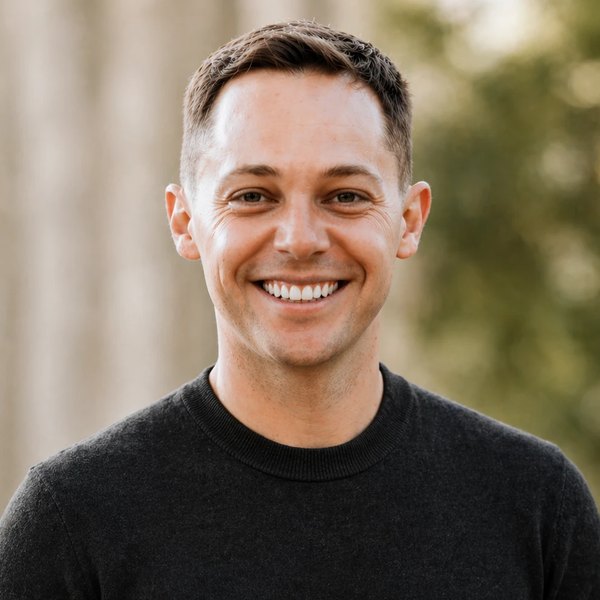
I grew up in South Africa and have been an entrepreneur for most of my working life. These days I build as many things as I can with AI, and whatever I make in my own time ends up here.
I'm curious about the big questions, like what reality is and what a mind is for, and I like working on them in the open. I also run every day. I probably shouldn't.
Media and interviews: The New York Times, 2025 ↗ · Forbes, 2025 ↗ · The Wall Street Journal, 2024 ↗
Two questions to choose what to focus on. Change the view at any time.
Is making first versions of words, code, analysis or plans a main part of your work?
Beyond the output, does your work depend on a licence you hold, trust in you, your physical presence, or responsibility you carry for the result?